Reen Singh is an engineer and a technologist with a diverse background spanning software, hardware, aerospace, defense, and cybersecurity.
As CTO at Uvation, he leverages his extensive experience to lead the company’s technological innovation and development.
The NVIDIA DGX Platform is an all-in-one supercomputing solution for enterprise Artificial Intelligence (AI). It integrates specialised hardware, optimised software, and comprehensive support services into a single, unified system. This “turnkey” approach means businesses can deploy AI solutions immediately, bypassing the complex and time-consuming process of integrating disparate components like servers, GPUs, and networking. The platform has evolved from individual DGX servers to include scalable DGX SuperPOD clusters for large-scale projects and DGX Cloud for on-demand, cloud-based access, reflecting NVIDIA’s shift towards providing end-to-end AI solutions.
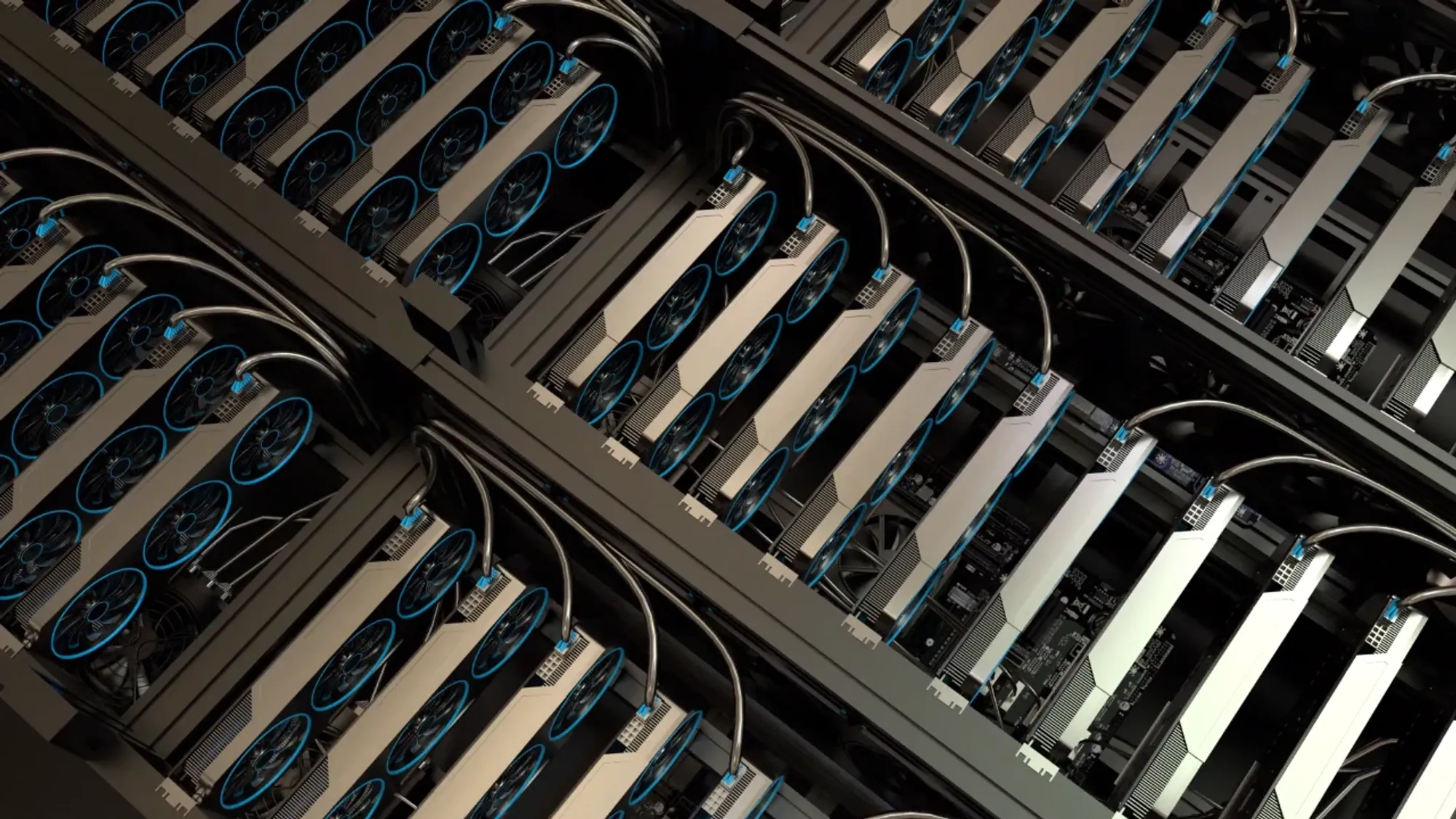
The DGX Platform’s hardware is purpose-built to eliminate bottlenecks in AI training and inference. DGX Servers feature 8-16 NVIDIA GPUs per unit, utilising NVLink technology for ultra-fast GPU-to-GPU communication and a unified memory architecture, allowing all GPUs to function as a single, powerful processor. For larger projects, DGX SuperPOD scales performance exponentially by combining multiple DGX servers into pre-validated clusters. High-speed networking, such as Mellanox InfiniBand with RDMA (Remote Direct Memory Access), ensures seamless data exchange between GPUs without CPU involvement, leading to near-linear performance scaling as more DGX nodes are added to a cluster.
Beyond its powerful hardware, the DGX ecosystem includes an integrated software and services layer. The core software stack features DGX OS, an Ubuntu environment optimised for NVIDIA GPUs, and management tools like Base Command Manager for cluster orchestration and Fleet Command for deploying AI models to edge devices. The AI Enterprise Suite offers pre-trained models such as NeMo and BioNeMo, as well as MLOps tools like TAO and RAPIDS, to accelerate AI development. Managed services include DGX Cloud, providing hourly access to the full DGX platform via major cloud providers, and expert support from NVIDIA AI specialists, ensuring optimal performance and maximum return on investment.
Enterprises opt for the DGX Platform primarily to overcome the complexity, high cost, and inherent risks associated with building custom AI infrastructure. DGX significantly reduces “time-to-solution” by providing pre-tested, “plug-and-play” hardware and software, eliminating months of integration and debugging. It offers superior performance efficiency through optimised software and hardware integration, leading to higher GPU utilisation. Over five years, DGX also demonstrates a much lower Total Cost of Ownership (TCO) compared to DIY solutions, due to reduced administrative costs, optimised power consumption, and fewer hidden expenses from integration and downtime. Furthermore, DGX provides enterprise-grade security with FIPS 140-2 certified encryption and robust compliance features, which are challenging to replicate in DIY setups.
The DGX Platform addresses a wide range of industry-specific challenges at scale. For Generative AI Development, it enables the training of massive models (100B+ parameters) by utilising its unified memory architecture and NVLink, drastically reducing training times. In Healthcare, it accelerates drug discovery through domain-specific frameworks like BioNeMo, allowing researchers to simulate complex biological interactions and identify drug candidates much faster. For Manufacturing Efficiency, the DGX Platform, particularly via Fleet Command, facilitates real-time defect detection by deploying AI models to factory-floor edge devices, improving quality and reducing waste.
Enterprises have flexible entry paths to adopt the DGX Platform, tailored to their specific scale and needs. These include deploying a physical DGX Appliance (On-Prem) in their own data centre for full control and dedicated resources, or accessing the DGX Platform via subscription through DGX Cloud on major cloud providers like AWS or Azure for instant scalability without significant hardware investment. For large-scale deployments, DGX SuperPOD offers exaFLOP-scale performance for trillion-parameter models, with NVIDIA engineers designing and validating the entire cluster. Additionally, NVIDIA offers LaunchPad for risk-free, hands-on labs with DGX systems and a Readiness Assessment service to evaluate data centre compatibility for optimal deployment.
The “turnkey” concept, as applied to the NVIDIA DGX Platform, signifies that the system is ready to use immediately after installation. Unlike traditional approaches where businesses must separately source, integrate, and configure servers, GPUs, networking, and AI software, the DGX Platform provides a unified, pre-configured environment. This eliminates months of complex setup, compatibility troubleshooting, and infrastructure fine-tuning, allowing enterprises to quickly transition from installation to developing, training, and deploying AI models at scale. It means the focus remains on innovation and AI development rather than infrastructure management.
The DGX Platform is designed for seamless scalability through several integrated features. Individual DGX Servers are powerful, but scalability is truly unlocked with DGX SuperPOD, which clusters dozens of DGX servers into a single, cohesive unit. This is supported by pre-validated, high-speed networking technologies like Mellanox InfiniBand, which uses RDMA (Remote Direct Memory Access) to allow GPUs to exchange data directly without CPU intervention. This end-to-end optimisation minimises latency and packet loss, ensuring near-linear performance scaling as more DGX nodes are added. Furthermore, software like Base Command Manager orchestrates multi-server clusters, automating job scheduling and resource allocation, ensuring efficient utilisation of all available compute resources as projects grow in size and complexity.
Unregistered User
It seems you are not registered on this platform. Sign up in order to submit a comment.
Sign up now